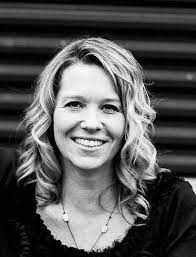
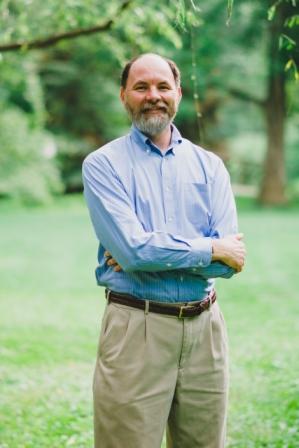
By Roger Barbee
Irises
On the Lake Norman road where we lived was a brick rambler with many outbuildings, a few derelict cars scattered about, and other items. It was a bit over-run to say the least. However, the first spring we were there I admired a long row of glorious irises near the road—peach, yellow, purple, and red-all of various shades- seemed to flag me down each time I drove past the overgrown yard. On one of our outings, I pointed them out to Mike.
Mike and I had been competitors during our high school wrestling careers. He was a year behind me, but for two years we faced each other. Strangely enough, when Mary Ann and I moved to Mooresville, where he lived, he and I re-united. Terri his wife was an agent for a beauty product that my wife used and during their first conversation their husband’s names emerged and when Terri told Mike about the conversation, he remembered me. The four of us met for lunch, and Mike and I began sharing a weekly time. Two old competitors who shared a great deal, such as growing up in different but small cotton mill towns. However, we differed on religion and politics which led to lively discussions. I still remember him once looking at me during one such talk and asking, “Are you that naïve?”
Being a native of the area and an engineer for Duke Power, the company that built lake Norman, Mike was a source of knowledge of the lake and its area. We often drove through the vicinity as he shared history of the flooding of the Catawba River and the rise of not only the water, but the energy for which the lake was designed. Once we went to Troutman for him to show me where his father and he would fish next to a now flooded grist mill, and he told me that the Route 150 metal bridge that had spanned the river was still there, but just under about 100 feet of lake water. I once asked him what was most difficult in building the lake and he grinned, saying, “Getting it level.”
On one spring day, as we were passing the house with the irises, I asked him if he would help me out. I explained that I wanted to ask the owner about the row of flowers, but my wheelchair made it impossible to approach the house. Without a pause he said, “Pull in.”
The curved drive led us past even more “stuff” than was visible from the road. The yard was jammed with discarded items giving it the look of a permanent yard sale. The carport of the 1960’s rambler had no car, but many other items-such as riding lawnmowers. However, as soon as I parked, Mike got out and walked to the door. An elderly woman wearing a housecoat answered his knock, heard his explanation about a man in a wheelchair, and gracefully walked down the brick steps to stand in a space of the carport to talk with the man in the wheelchair—me.
Mrs. Bumgardner and her husband had had a farm, but Duke Power claimed it through Eminent Domain to build the lake. Their farm had stretched to the now flooded Catawba River basin, and they had to move to the new brick rambler to make room for the lake in the early 1960’s . Her husband was deceased, but a granddaughter lived with her and helped manage things . She seemed delighted that I admired her irises and gave me permission to come back and remove a few for our garden “down the road.”
Before long, after the bloom, Mary Ann and I returned to remove a few irises. I most liked the deep, almost black, purple ones and chose several of those, but also a few white/purple mixed ones and some pale, yellow ones. On his next visit Mike helped me plant them in a small bed beside our garden gate. They did well, and for many springs we enjoyed their brightness in the corner beside our garden gate.
But everything else changed while the little iris garden grew, spreading its glory in that corner.
Mike’s cancer returned. Years before he had battled prostate cancer, and now Terri and he travelled often to Durham for treatments. Yet, on each weekly visit with me he stoically shared his medical report as we continued our shared time. He always called before coming and would ask, “Want a coffee?” After arriving with my coffee and his soda, he would sit on my shop deck and talk about his family, especially his grandson’s approaching wedding. He would do small, but important things for me in the shop or yard—such as hang a bird box on a pine tree. He would also rake pine needles for mulching in his yard. Before long we stopped going to lunch because that took too much of our available time. We sat in the shop and talked because shared words became more important than food. I can’t remember his last visit to my shop, but I know that it was one like all our times before. No food but lots of nourishment.
I have read that the last sense we lose is our hearing. So the last time I saw Mike, who was then in hospice, he did not know I was there, but I held his hand and told him many things. I like to believe he heard me.
Not long afterwards we sold our Lake Norman house to return to the Shenandoah Valley. But I told the purchasers that I was taking a few of the irises.
Now, at the end of April 2026, there is a flush of dark, almost black, purple, and other colors gracing a spot near our back garden gate.