By Ashlie Miller
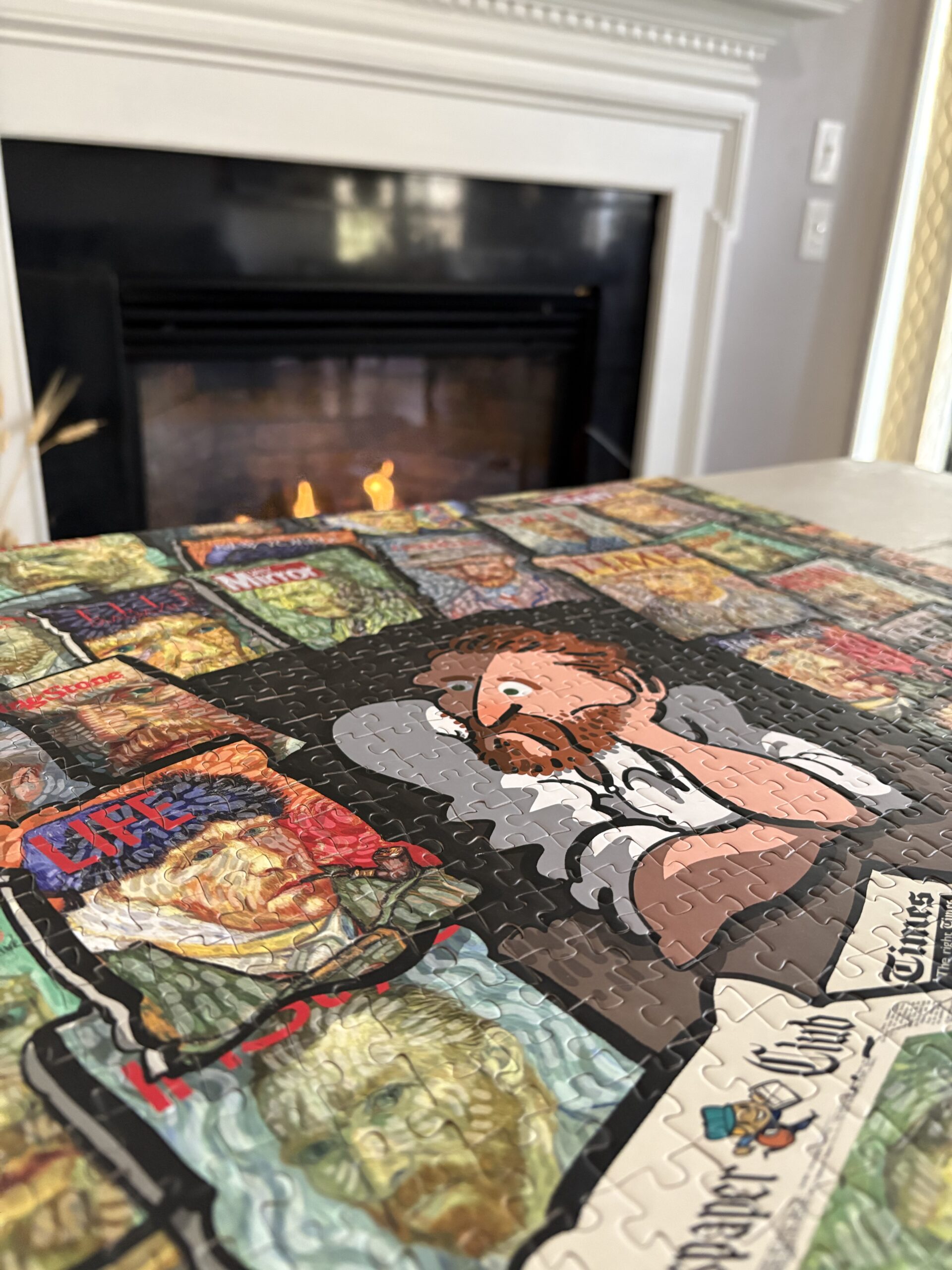
I have a fondness for puzzles; maybe you do, too. Five years ago, puzzle and board game sales increased as people found themselves housebound for weeks and months on end. My oldest son bought me a 1000-piece puzzle this Christmas. I smiled and brought out a different 1000-piece puzzle later in the day that I knew he would enjoy (a Van Gogh-inspired one) and said, “Let’s get to work!”
I especially enjoy puzzles in the winter. Christmas busyness has passed, and productivity is stalled for a bit, yielding to opportunities to just be present. There is a beautiful quietness as one sorts edge pieces, those with words or unique patterns, and then the rest of the pieces. Isn’t it interesting that we see our desire for structure in life in something as simple as completing a puzzle? Usually, we try to get the frame – the edges – in place to help us understand scope and context. Some pieces seem very ordinary, nothing special – all those black pieces with no variation in shading. But, just like life, some parts are not meant to be showstoppers; they just exist to support the greater whole of what we see and experience.
In my most recent puzzle, I became frustrated at repeating patterns, even though they were patterns from art I enjoy. While unique patterns made some parts easier, a repetition of a background or color scheme could throw us off and stall our process. Discernment is key to getting things into the right alignment, both in puzzles and in life.
The daily ritual and resoluteness for completing the larger puzzles remind me of the importance of just doing the next thing. It may not be flashy, progress may seem minuscule, but learning to faithfully show up patiently and dutifully is a lesson that is rarely learned through something so lovely.
Then, we come to the last piece of the puzzle – the most sacred of pieces. Everyone jokes about how they will sweep in and put in the last piece – usually the ones who have only helped place four of the pieces and then abandon the project for more exciting things. I was very honored when one son, who stuck with me the longest on this journey, quietly held the last couple of pieces and then handed me the last one – the keystone – to place in the last hole. No ceremony or regalia, just a knowing look that we stuck it out. Things we could not see as we worked through the jigsawed pieces now became visible and obvious. “Why did that piece not really fit there? How did I miss placing this one here?!” There is a quiet emotion resonating through me as we look at the whole picture. A bit like our lives, a whisper calls to our hearts of longing for wholeness and searching our entire lives for it.
At last, it is time to consider when it is appropriate to tear apart the puzzle and put it away. I have heard nasty rumors of families who, upon completing, have a family member who rips the puzzle off the table in a grand gesture. I guess that is like ripping off the band-aid. I suppose the lesson for those of us who do not glue and frame our puzzles is that we can be okay when meaningful things are taken apart. It does not mean our time has been wasted. We have learned something long-lasting in the process.
Time start a new puzzle…
Ashlie Miller gets lost in puzzles in Concord, NC. You may email her at mrs.ashliemiller@gmail.com.